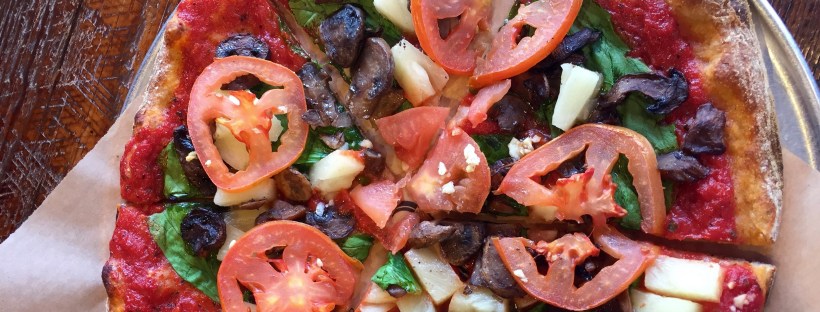
A week ago, my Senior English class opened up to each other. Our hearts raced as we uttered the writing of the people around us – writing that described our socialization and how it affected our daily endeavors. Suddenly, I heard the words I had written. I sensed ruffles among the crowd as people wondered, “Who is the vegan person?” and, “Why is eating plant-based considered a target identity if it is their decision?” Immediately I questioned my identity, wondering why I displayed an aspect about myself that I was afraid to confront.
And then, I realized I was not alone.
My class was full of students who had generally kept their target identities from the public eye. Why do we hide certain aspects about ourselves? Why aren’t we aware of other aspects about ourselves? Answering these questions enables us to reflect on our awareness, especially in the presence of those who are different from us.
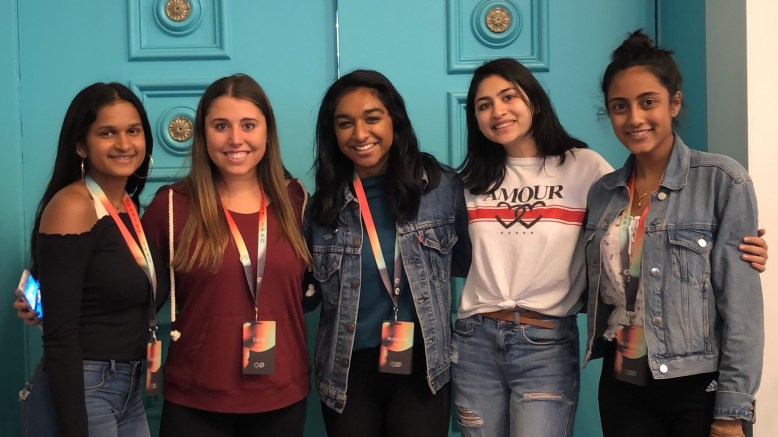
My friends from a program I was involved in last summer. Although we come from different backgrounds, our moments together have bonded us deeply.
Author Bobbie Harro recognizes our agent and target identities as two groups that differentiate in terms of power and privilege. “We get systematic training in ‘how to be’ each of our social identities throughout our lives” (“Cycle of Socialization”). Society teaches us that agent identities are the “norm” and acceptable, while target identities are “different” and questionable. We are each born into the process of socialization, being taught who we are supposed to be and what is considered “good” or “bad.”
We are often blind to certain aspects about ourselves that others encounter in every waking moment. For instance, my upbringing has perpetuated an invisible system that keeps me from recognizing my race. I was trained to not recognize my agent identity, so I do not often think about being white.
I grew up around people of the same race as me, and I have unconsciously become unable to how my race affects my identity. Although I am very different than my family, being in such a homogeneous environment has shielded me from recognizing my race on a larger scale.

These are many people I grew up with. Although we are all the same race, we could not be more different from each other!
On the other hand, people who belong to target groups are well aware of that aspect of their identity. According to American feminist and anti-racism activist Peggy McIntosh, “as my group was being made confident, comfortable, and oblivious, other groups were likely being made unconfident, uncomfortable, and alienated” (“Unpacking the Invisible Knapsack”). The cycle not only trains people of agent groups to unquestionably reap systemic privileges, it also pressures target groups to remain dormant.
To better understand the experience as a member of a target group, I reflected on one of my own negatively perceived identities. I frequently think about how I am vegan since it affects my daily interactions with my friends and family. When my friends agree to go out to eat, I either have to eat beforehand or exclude myself from the social interaction entirely.
Most people do not quite understand my beliefs, and they often make me feel looked down upon. I have to monitor how I explain my values when people ask why I would ever want to give up meat to make sure I don’t “offend” anyone or perpetuate the judgement passed on me.
I am often interrogated about my validity, health, and decisions. I constantly feel the need to be on the defense and find appropriate ways to explain my beliefs without making myself appear as an outcast.
Like many, I tend to keep my target identity to myself for fear of being an outcast. Yes, I am vegan, but I am also hard-working, athletic, creative, sympathetic, and positive.
In order to break the ever-continuous cycle, agent and target identities must recognize and support each other, looking beyond our “designated” groups. We must take pride in who we are to inspire others and ignite change.
 Sami's Social Speculation
Thanks for sharing, Sami! You do an effective job of showing the ways that you are more than a vegan…or that being a vegan is just a piece of a more complex identity. I would love to know more about your experiences as vegan. You mention briefly that people make comments about you, but the specifics of these comments aren’t really developed . In her essay on socialization, Harro talks about identities that we choose and identities that we don’t choose. You don’t, for example, necessarily get to choose your race. You do get to choose what you eat. Since you take a short look at both of these identities, I wonder if it might be interesting to contrast those experiences. For example, have you ever considered NOT being vegan because of the comments people have made? Was it hard to start down this path? Is this a family choice, and as such not really a choice for you? There’s so much to explore!
LikeLike