
Some days I wake up in a fog. My eyes are watery, my neck has a crick, and my dreams are bouncing through my mind. Stepping outside into the frigid air doesn’t change my perspective; I see pure darkness and darkness only.
On days like these, it is difficult to steer through life. It feels as if I am on autopilot, traveling through a patch of monstrous clouds, unsure of what’s to come. I may look at the panel of neon controls in front of me and dread my responsibilities, but I likely am too absorbed in my inner fog to care all that much.
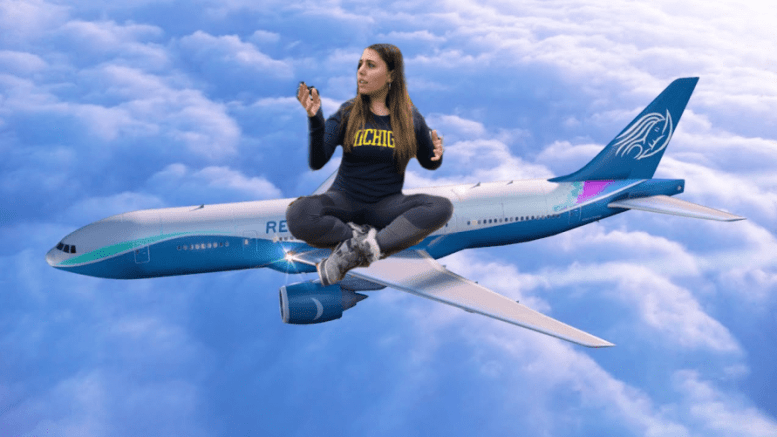
How I navigate through the clouds determines the strength of my conscience. I can dwell on my inner troubles and put on an unassuming mask, or I can break through the mask with my smile and lend a hand to those who are lifting their own baggage alone.
Throughout life, we may experience sudden flips and turns. Sometimes there might be turbulence trying to shake us, but we must recognize that we can take control of any situation and find a clear path to steer toward.
The passengers on Flight 93 surely took control. After their flight was hijacked, they grouped together and fought against people who were inflicting danger on our capital. They may not have ended up flying above the clouds, but they were subtle drops in the ground that quickly turned into ripples.
The engine is the driver of our conscience, thrusting us through the rough patches. However, sometimes our engine may be running low. Puffs of milky air scatter throughout the sky until we gradually drop in elevation. But who’s to say that we cannot point our noses back toward the sky and fly above the clouds?
In My Bloody Life, Reymundo Sanchez displays how he powerfully recovered from his weakening engine; he had tirelessly attempted to navigate through the pressures of gang life and finally steered into a path between the clouds, soaring higher than he had ever before.
We are constantly experiencing unique moments and being bombarded with new information. This information can not only interweave and confuse itself in our minds, but it also brings out the most significant qualities within us. It is up to us to decide whether we take off with what we’ve learned or stay on the ground.
More than simply standing up for what we believe in, acting with our conscience also involves striving to bolster the well being of others. Just as Chiune Sugihara risked his career and family to protect thousands of Jews in the Holocaust, we must be willing to lend a piece of ourselves toward helping the people around us – especially when the sky is particularly cloudy.
Sometimes it seems like gravity keeps pulling us down. Following our conscience may be the right thing to do, but we often create everlasting contrails of excuses and claim to never find the “right” time to turn off autopilot and enforce our inner morals.
It is easier said than done to steer on a different path – trust me, I know. I haven’t always had the strength to counteract society’s piercing words, especially to protect people like me.
A few months ago, my phone blew up with texts from a group chat. People were angstily typing and ridiculing students at my school for being Jewish, implying that they were inferior. As an interfaith person, I was immediately taken aback to witness such abrasive attacks, especially since they were indirectly targeted toward me. Nevertheless, I was afraid. I was too afraid to stand up and speak on behalf of others like me. My engine was failing; I couldn’t resist gravity.
Does our conscience come and go like the wind? How can we familiarize ourselves with the control panel in front of us?
Many people may fear the energy and obstacles involved in rewiring our conscience, but the more we struggle, the more our souls can soar. Margaret J. Wheatley’s Willing to Be Disturbed explains how “change always starts with confusion; cherished interpretations must dissolve to make way for the new” (3).
It starts within us. In order to act on our conscience, we must dig deep and find where we need to improve. We must look inward and figure out what is causing our engine to malfunction. We must tightly grasp the control wheel and find a new way through the clouds.
Some days I wake up in a fog, but fog is nothing more than condensed air. I must fasten my seatbelt, prepare for takeoff, and fly the plane.

Original photo by The Telegraph.
 Sami's Social Speculation
Sami I really love this all! Your images so clearly relate to your essay which allows the reader to get a clearer understanding on the points your trying to make regarding conscientiousness. I think the plane example painted a great picture about what conscientiousness means to you and how this could relate to all of us.
LikeLike
Your pictures made me smile and I absolutely loved the metaphor. I felt like this could be applicable to me (and everyone) and loved every word 🙂 Great job!
LikeLike